If you’re planning a bathroom remodel, there’s one shower feature worth putting on your wish list: a bench.
Shower benches are one of the most requested features we see in bathroom remodeling projects, and it’s easy to understand why. They give you a place to sit, make shaving easier, provide a convenient spot for toiletries, and can make a shower more comfortable and accessible as your needs change over time.
For Dallas homeowners planning a primary bathroom renovation, the key is figuring out which type of shower bench makes sense for the size of the shower, the overall bathroom design, and how you actually plan to use the space.
According to the National Kitchen and Bath Association (NKBA) Bath Planning Guidelines, a shower seat should be 17 to 19 inches above the shower floor and 15 inches deep. We also recommend maintaining at least a 3-foot-square shower floor area, with the bench sitting outside that footprint whenever space allows.
Once you know you have room for one, you have another decision to make: What kind of shower bench should you choose?
Here are three of the most common options we consider when designing custom bathrooms and showers:
1. The Completely Built-In Shower Bench
This is probably what comes to mind when you picture a traditional shower bench.
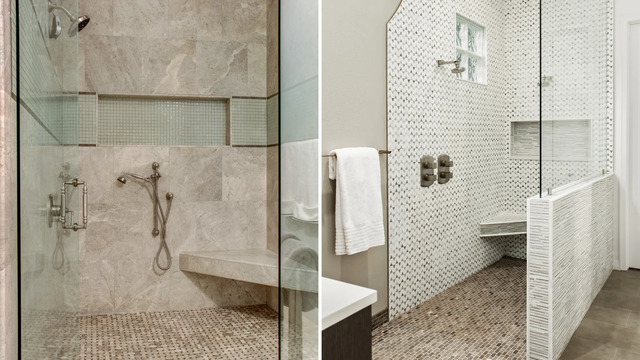
A built-in bench is framed directly into the shower, similar to a knee wall, and then incorporated into the shower’s waterproofing system. From there, it can be finished with the same tile or stone used throughout the shower.
That gives you plenty of flexibility from a design standpoint. Matching the bench to the shower walls can help it blend into the space, while topping it with the same material used on the bathroom vanity can create a more tailored, cohesive look.
Placement matters, too. A built-in bench can extend to the shower glass, stop short of it, sit within a corner, or even help visually separate a shower and bathtub area. These are details worth working through during the bathroom design process rather than trying to solve once construction is underway.
PRO TIP: If you’re adding a built-in shower bench, consider installing a handheld showerhead within easy reach. It makes the bench more functional now while also incorporating a simple universal design feature that could make the bathroom easier to use in the future.
2. The Floating Shower Bench
Want the function of a bench without the visual weight of a fully built-in version? A floating shower bench may be the better fit.
There are a couple of ways to create this look.
The first is essentially a built-in bench without the base. The seat is framed and securely supported from the wall, while the shower floor continues underneath it. This can make the shower feel more open and is particularly useful when you want to preserve as much visible floor space as possible.
Floating benches can be rectangular, triangular, or customized to the layout. Corner shower benches are especially useful when you want seating without dedicating a large portion of the shower to it.
Another option is to use a solid piece of stone, quartz, or a similar surface material installed on waterproof, rust-resistant shower bench brackets. This creates a much slimmer profile and can be a strong choice for a modern bathroom design.
PRO TIP: Ask whether a remnant from your bathroom vanity countertop can be used for the shower bench. With the right support system, it can create a custom floating bench that coordinates with the vanity and puts leftover material to good use.
3. The After-Market Shower Bench
Sometimes the best built-in feature is no built-in feature at all.
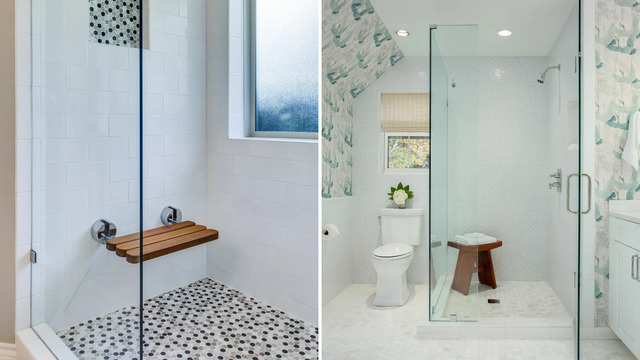
If your shower is on the smaller side, or you simply don’t want to permanently give up the space, consider a wall-mounted folding shower seat. When you need it, fold it down. When you don’t, fold it against the wall and reclaim the extra room.
Today’s folding shower seats are available in a range of finishes, making it easier to coordinate one with your plumbing fixtures and other bathroom hardware.
A freestanding waterproof bench or stool is another flexible option. Teak is popular because of its natural water resistance and warmth, while solid-surface stools can work well in contemporary bathrooms.
And if your bathroom includes both a freestanding tub and a shower, look for coordinating pieces. Some manufacturers offer tub and shower accessories designed as a collection, which can help the entire bathroom feel more intentional.
So, Which Shower Bench Is Right for Your Bathroom?
There isn’t one shower bench that works for every bathroom remodel.
A spacious walk-in shower may have plenty of room for a full built-in bench. A smaller Dallas bathroom may benefit from a floating corner seat. And for homeowners who prioritize flexibility, a folding or freestanding option could make the most sense.
The important part is deciding early.
Your shower bench affects the shower layout, waterproofing, tile installation, glass placement, plumbing, and available floor space. If you know you want one, bring it up during the design phase so it can be properly incorporated into the bathroom remodeling plan.
And think beyond how you’ll use it today. Features like shower benches, handheld showerheads, curbless entries, and thoughtfully placed fixtures can support aging in place and universal design without making a bathroom look institutional or sacrificing style.
Planning a bathroom remodel in Dallas or the surrounding North Texas area? A well-designed shower bench is a relatively simple feature that can add comfort, function, and flexibility to a bathroom you’ll use every day.